


Earlier this year, the Psychiatry Institute at Hospital das Clínicas launched the National Center for Research and Innovation in Mental Health (CISM), aimed at researching the environmental and genetic factors linked to mental disorders and the effectiveness of mental health apps. This initiative is supported by Banco Industrial do Brasil (BIB) and the São Paulo Research Foundation (FAPESP).
The Center will have two hubs in the São Paulo countryside, in Indaiatuba and Jaguariúna, where 27 Primary Care Units (UBS) will develop studies with the population, within the CISM guidelines.
There will be three strategic axes, which were considered as priorities by the researchers. The first will seek to understand how environmental and genetic factors affect the development of children and adolescents. The second axis will focus on evaluating the effectiveness of technologies in the prevention and treatment of mental disorders. According to a study published in 2020 in the JMIR mHealth Uhealth magazine, which specializes in medical technology, only 2% of cell phone apps aimed at maintaining mental health have a scientific basis, which makes the gathering of information on this topic fundamental.
Speeding up the implementation of new discoveries in public health is CISM’s third front of action, which seeks to help reduce the time between scientific research and clinical practice. In partnership with UniEduK, the Center will provide patients from the 27 Primary Care Units with the Conemo app, indicated for symptoms of depression, anxiety, and insomnia and already tested in experimental studies in Brazil and Peru.
An investment of 40 million reais was received for the creation of CISM. The Center will also offer 120 scientific initiation scholarships, 19 PhD scholarships, 6 post-doctoral scholarships, and 2 vacancies for USP Psychiatry professors.
Implementation of the New Bidding and Agreements Law is postponed

President Lula edited the Provisional Measure 1.167/2023, which extends until December 30th the validity of the old Bidding Law (Law 8.666/93). This measure met a plea from mayors, since 60% of the cities were unable to meet the deadline to adapt to the new law, according to a survey by the National Confederation of Municipalities (CNM). The PM offers an amendment to the Bidding and Administrative Agreements Law(Law 14.133, of 2021), which unifies all legislation on the subject and was scheduled to come into effect as of April 1st. The regulation gave public managers a period of two years to adapt to the new rules.
To its associates, ABIMED has presented a comprehensive study, commissioned to the law firm SPLaw, which focused on the consequences of the change in legislation for the health sector. With the extension, federal, state, and municipal public administration bodies can publish public notices in the old formats until December 29th of this year, as long as the option chosen is expressly stated in the notice.
The new Bidding and Agreements Law limits the use of suppliers that are Micro-enterprises (ME) or Small Businesses (EPP), in order to restrain companies from these segments that are created “specifically” to access preferences in bidding processes. The study highlighted that the new legislation is more precise in the requirement of technical capacity certificates, because before, on the whole, public notices required certificates in a generic way.
The SPLaw document also points out that the NLLC requires impact analysis prior to the determination of suspension or termination by the Public Authority, which represents great progress, as it discards the merely formal analysis. In the firm’s legal understanding, Law 14.133 will allow new models of agreements with the Public Administration: “in the supply and associated service provision, in which the contractor is also responsible for the operation / maintenance of the equipment supplied; in the competitive dialogue, which opens the possibility of partnerships with selected bidders to develop alternatives to meet their needs – which may represent a solution for specific adaptations in the medical equipment sector – and in the efficiency contract, which may include the supply of goods, saving expenses for the contractor and providing earnings for the contractor based on a percentage of the savings generated.”
The appreciation of compliance policies is also foreseen in the new law. Compliance programs are now mandatory requirements for public agreements. Still according to the legal document, there are hypotheses for the exemption of biddings that are important for the healthcare segment, as specified in Art. 75 XII: “for agreements in which there is a transfer of technology of strategic products for the Unified Health System (SUS), as listed in the act of the national management of SUS, including during the acquisition of these products in the technological absorption stages, and in amounts compatible with those defined in the instrument signed for the transfer of technology.”
Another progress included in the NLLC is that it now values good contracting history with the government, which adds the possibility of a negative list for companies that are deemed unsatisfactory. ABIMED continues to be committed to closely following the consequences of the law in the health technology sector and orienting its associates.
Companies can be environments that promote mental health

In the month in which the World Health Day was celebrated – April 7th – ABIMED decided to divulge contents that regard mental health issues, a provision from the Global Compact of the United Nations Organization (UNO), of which the entity is a signatory. The Global Compact is a call for companies to align their strategies and operations with the Ten Universal Principles in the areas of Human Rights, Labor, Environment, and Anti-Corruption, and to develop actions that contribute to meeting today’s challenges in society.
Mental health care of employees needs to be seen as something permanent and integral to the business strategy of companies, not just as corrective measures, which often act on the effects but do not treat the causes.
It is currently agreed that work can be associated with the onset of mental disorders. So much that the WHO (World Health Organization) included Burnout syndrome among the list of occupational diseases in 2022. Last year, an Oracle survey in 11 countries showed that 76% of employees feel that their companies need to do more to protect their mental health. In Brazil, the number is above the global average, which is already very high – 84% of workers claim for more measures.
The challenge is immense, but the positive aspect is that more companies are making an effort to take care of the mental health of their employees. The measures range from encouraging meditation and mindfulness, aimed at fighting stress, to decompression rooms, which are cozy environments for a healthy break from routine. An even more concrete solution that many companies are adopting is the hiring of services aimed at promoting mental health, such as online therapy, as part of the employee benefits package. These are positive examples that companies can be places that promote health, rather than environments that promote sickness.
ABIMED features in a international regulators’ forum

On March 27th and 28th, the IMDRF 23 (International Medical Device Regulators) took place in Brussels (Belgium), , with ABIMED taking part. Established in 2011, the IMDRF is a forum of medical device regulators from various countries who work together for international regulatory harmonization and convergence.
On the first day of the event, a workshop was held, led by IMDRF and two organizations of which ABIMED is a member: DITTA (Global Diagnostic Imaging, Healthcare It & Radiation Therapy Trade Association) and GMTA (Global Medical Technology Alliance). With the theme “Life cycle of medical devices: the importance of post-marketing related activities”, improvement opportunities and challenges in Safety Notifications and Surveillance were discussed from the perspectives of regulators, industry, and healthcare professionals.
On the second day, it was time for the IMDRF Stakeholder Forum with regulatory updates from the IMDRF Management Committee and Official Observers (World Health Organization and Argentina); evaluation of the progress of IMDRF work items and the Stakeholders Session with presentations from the: African Medical Devices Forum, Global Harmonization Working Party, Asia-Pacific Economic Cooperation, PAHO (Pan American Health Organization), DITTA and GMTA.
It is important to note that the IMDRF Management Committee includes representatives of the European Commission and representatives of the EU Member States, along with Australia, Brazil, Canada, China, Japan, Singapore, South Korea, and the USA. The forum produces guidance documents aimed at simplifying the work of regulators and economic operators globally.
ABIMED continues defending strategic themes for the sector
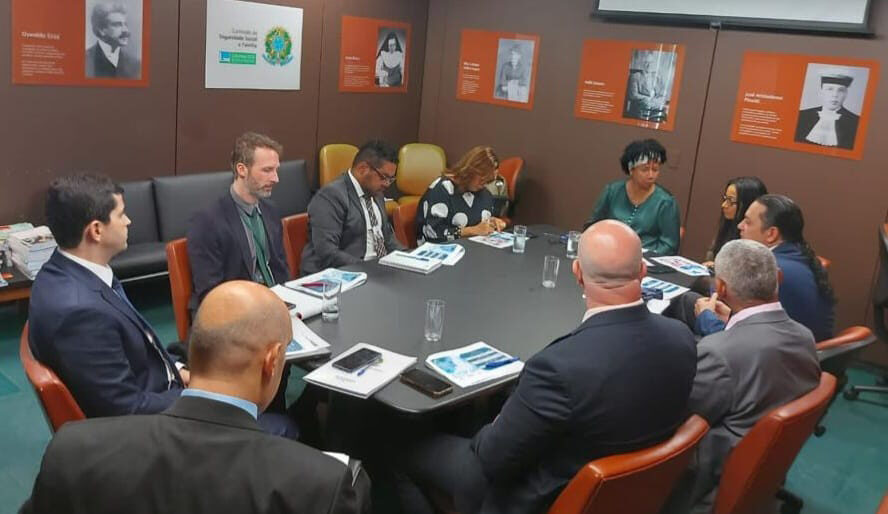
With strategic and effective feats, ABIMED has been achieving progress in important issues for the medical equipment and devices sector. ABIMED’s Institutional and Governmental Relations area in Brasilia acted decisively for the creation of the MedTec Mixed Parliamentary Front and in the launching of the Manifesto for Tax Reform, signed by the entities in the sector.
Beyond these topics, included on the Association’s agenda is the List of Exceptions to the Common Foreign Tariff (LETEC) for the List of Temporary Reduction of Import Duty Rates to Combat Covid-19, simply called the “Covid List”. ABIMED makes efforts so that, facing the possible ending of the Covid List, the NCMs (Mercosur Common Nomenclature) 9018.90.99 and 9018.39.29 return to LETEC, in order to avoid the finish of a period of about two decades of import tax exemptions.
In a meeting with the Executive-Secretary of CAMEX (Foreign Trade Chamber), Marcela Carvalho, ABIMED was able to explain the sector’s plea, as well as its concerns that changes in LETEC may affect products in the segment of medical equipment and devices.
Another topic of concern in the Institutional and Governmental Relations area is the use of good practices in Health Technology Assessment (HTA) for medical procedures and devices. The goal is to help qualify the HTA processes for medical devices in Brazil, collaborating with institutions, universities, thought leaders and decision makers, so that good practices are assimilated and widely used in the country.
ABIMED participates in a public hearing for Tax Reform
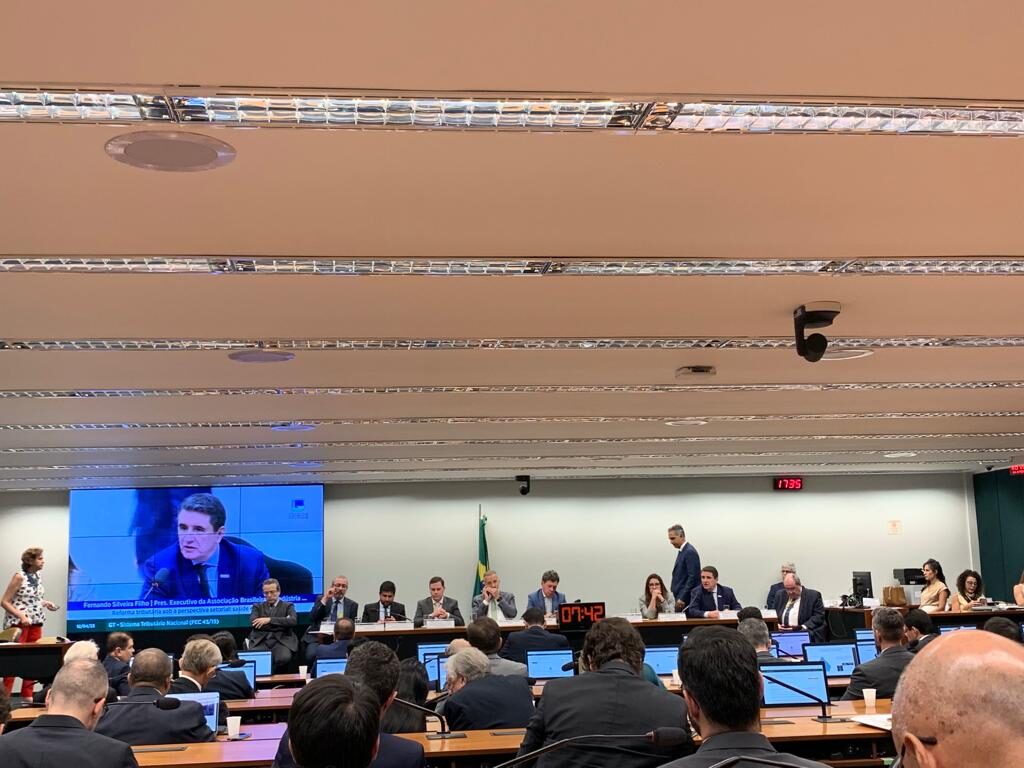
As the sector’s representative on strategic issues, ABIMED participated in a public hearing of the Tax Reform working party, on April 12th. The executive-president, Fernando Silveira Filho, spoke at the session in which representatives from the healthcare and education sectors took their stand.
He highlighted the particularities of the sector, which has exemptions and covenants signed over 25 years and a structuring of tax arrangements, with rates ranging from 2% to 68% and an average rate of 27.9% in the industrial segment and 32% in the supply segment.
For ABIMED, the Tax Reform must recognize the essence of the sector and meet the need for a convergent and neutral tax rate for the entire sector. “Besides being an importer, our country is not innovative enough to compete in the big markets. In this sense, the tax issue must also cover the discussion about attracting national and international investments. Brazil needs to get back to integrating the supply chains that are in the process of changing and reallocating arrangements. This is a huge window of opportunity,” he concluded.
Check out the public hearing in the link: https://lnkd.in/di8PrUPZ
ABIMED signs a manifesto about Tax Reform
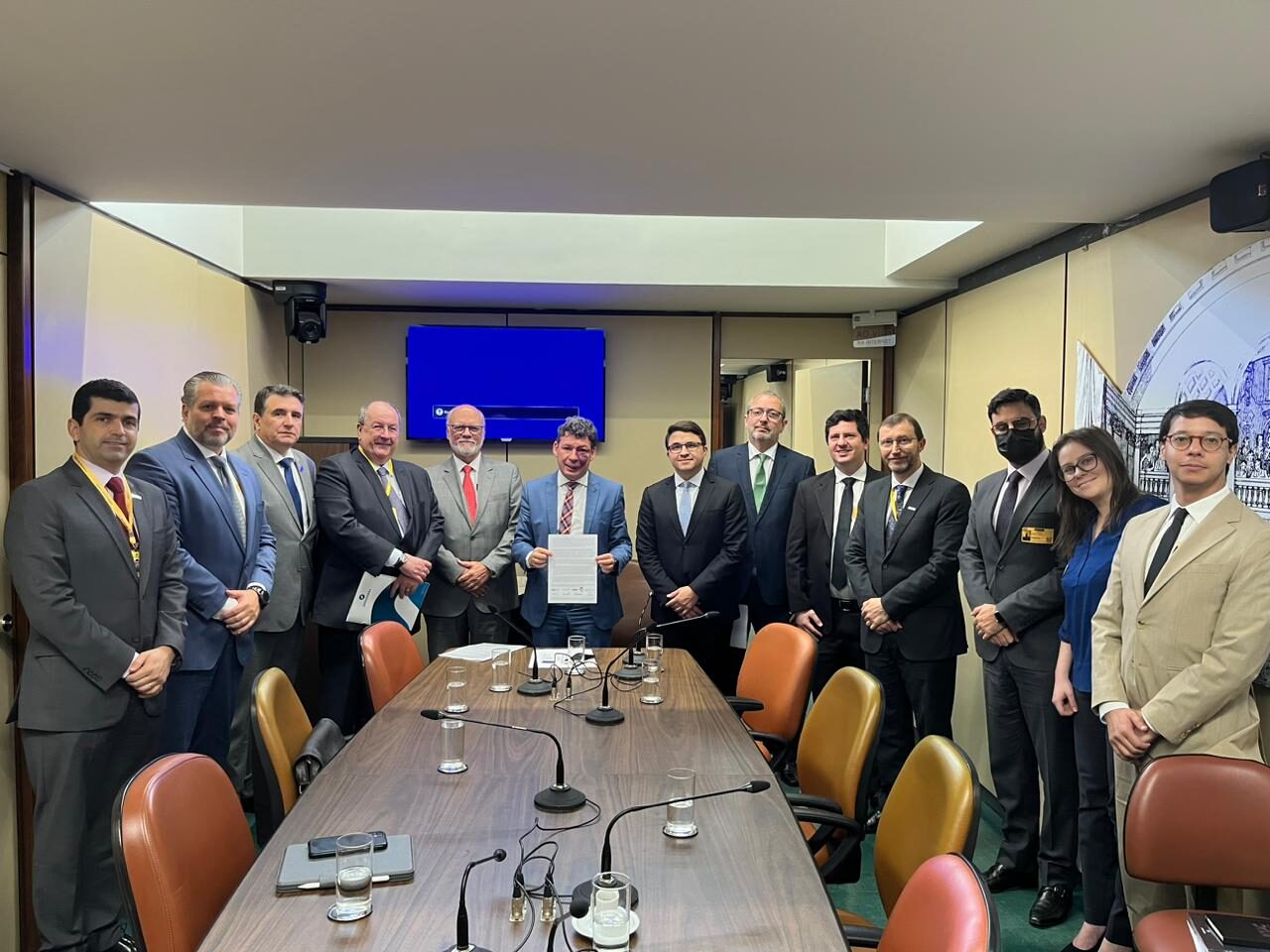
It is unquestionable that Brazil needs a Tax Reform, but the proposal must foresee a differentiated taxation regime for health goods and services. This is the premise of the Productive Sector of Health’s Manifesto on the Tax Reform, signed by ABIMED and seven other representative entities of the sector and delivered on April 5th to the Working Party that discusses the issue in the House of Representatives.
The document brings the position of the signatories before the proposals of amendments no. 45/2019 and no. 110/2019 to the Constitution, which concern the reform of the National Tax System. For the entities, differentiated taxation for the health sector must be seen as a priority, as it already occurs in almost all member countries of the Organization for Economic Cooperation and Development (OECD), according to the 2022 Consumption Tax Trendsreport, published in late 2022.
The health sector currently has a differentiated tax regime, due to its importance to society. Although the adoption of a single tax rate is a valid argument, the Manifesto notes that “it is fundamental to recognize the need to maintain the selective aspect of the tax,” after all, “the government is one of the most important consumers and one of the major beneficiaries of the tax exemption for the chain of medicines, medical devices, and health products. Brazil spends 9% of its GDP on healthcare, of which 40 to 45% is public spending. Increasing the tax burden on the sector is, to a large extent, making the government charge more of itself.”
ABIMED and other associations expect that the Manifesto sensitizes the government to the fact that the tax burden can bring serious risks, such as limiting access to treatment, generating insecurity in the population, increasing the difficulty of the inclusion of new technologies due to higher prices, besides making national products more expensive, thus making them less competitive.
For more information, read the full document
Termos sanitários de inspeção e de notificação: confira alteração na forma de acesso
A Anvisa alterou a forma de encaminhamento, para empresas do setor regulado, dos termos de inspeção e de notificação sanitárias decorrentes de ações de fiscalização realizadas em portos, aeroportos e voos. A partir da próxima terça-feira (2/5), os termos serão encaminhados para a assinatura das empresas por meio do Sistema Eletrônico de Informações (SEI). Da mesma forma, os documentos referentes ao cumprimento das notificações sanitárias também deverão ser peticionados pelo SEI.
Os termos de inspeção e as notificações sanitárias emitidos pelo sistema terão número de protocolo próprio e estarão relacionados ao processo administrativo gerado. A utilização do peticionamento eletrônico eliminará intermediários na recepção e no cadastro de documentos internamente na Anvisa, dando mais agilidade aos processos.
Dessa forma, a iniciativa permitirá um melhor acompanhamento do trâmite da petição, bem como o acesso à relação de documentos peticionados e recebidos pela Agência, por meio do recibo eletrônico de protocolo, conferindo rapidez, segurança, transparência e eficiência à remessa de documentos.
Com a adoção do sistema eletrônico como canal oficial para envio de documentos administrativos, será dispensada a apresentação de documentos em papel ou por e-mail. Para saber como fazer o cadastro, as empresas deverão acessar o Manual do Usuário Externo SEI-Anvisa e seguir os passos necessários, conforme orienta a publicação.
Acesse também as informações gerais sobre o SEI no portal da Anvisa.
A Agência informa às empresas do setor regulado que os documentos recebidos antes de 2 de maio, e que se encontram em fase de avaliação e resposta por parte da empresa, seguirão o mesmo trâmite anteriormente aplicado. Em caso de dúvidas, os interessados poderão utilizar um dos canais da Central de Atendimento da Anvisa.
Cadastro de usuário externo
Para acessar os documentos, é necessário fazer um cadastro como usuário externo do SEI, destinado às pessoas físicas que participam de processos administrativos junto à Anvisa. O cadastro de novos usuários deve ser feito mediante o preenchimento de um formulário eletrônico, disponível neste link: https://www.gov.br/anvisa/pt-br/sistemas/sei.
Ao clicar no link acima, você entrará na área do Sistema Eletrônico de Informações (SEI). O próximo passo é clicar em Acesso para Usuários Externos SEI. Logo após, selecione “Clique aqui se você ainda não está cadastrado”. Isso levará ao Cadastro de Usuário Externo. Vá até o final da página, acesse “Clique aqui para continuar” e preencha o formulário.
Após essa etapa, preencha e assine digitalmente o Termo de Declaração de Concordância e Veracidade e envie para
Para a comprovação da legitimidade do usuário externo como interessado da empresa, deverá ser protocolado, como peticionamento intercorrente no respectivo processo SEI, um dos seguintes meios comprobatórios: contrato/estatuto social da empresa; ata de eleição da atual diretoria, quando se tratar de diretor que não conste do contrato/estatuto social; procuração que delegue tais poderes a uma pessoa específica.
Fonte: Abimed, em 04.05.2023.